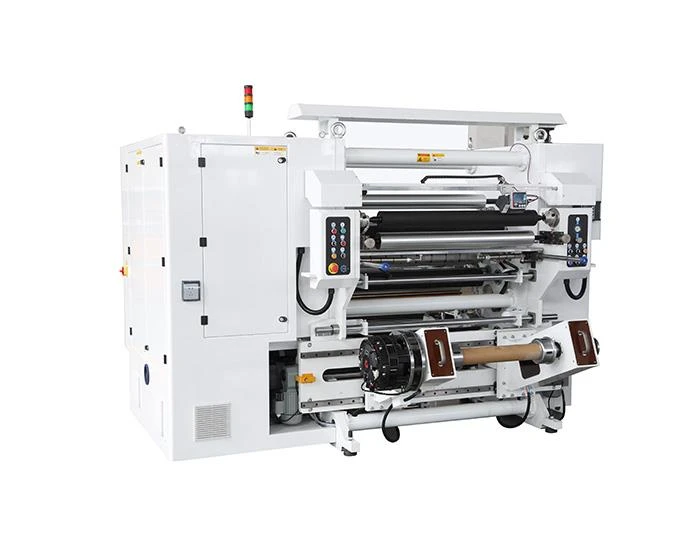

I. Regular Maintenance
1. Daily Cleaning: Clean aluminum shavings and impurities from the guide rails and table surface promptly. Lubricate the guide rails regularly to prevent rust and maintain accuracy.
2. Regular Inspection: Inspect the spindle, belts, air hoses, and electronic components for looseness or wear. Replace aging parts promptly to prevent a gradual decline in accuracy.
3. Tool Maintenance: Regularly check saw blade wear. Replace dulled blades promptly to ensure sharpness and reduce cutting deviation.
II. Operating Parameter Standards
1. Parameter Adaptation: Adjust the feed speed and air pressure according to the aluminum foil thickness: Slow down the feed and reduce air pressure for ultra-thin aluminum foil; slow down the feed and increase air pressure for thick aluminum foil.
2. Tool Compensation Update: After replacing the saw blade, update the tool compensation parameters in the industrial control screen promptly to match the actual saw blade thickness and avoid fixed dimensional deviations.
3. Material Pretreatment: Straighten the aluminum foil before cutting to reduce the impact of material deformation on cutting accuracy. III. Daily Management Standards
1. Power Off During Shutdown: Turn off the power when the equipment is not in operation to avoid prolonged power supply causing component aging and affecting accuracy stability.
2. Personnel Training: Provide technical training to operators to improve operational standardization and reduce accuracy problems caused by human error.
3. Periodic Calibration: Even if there are no obvious abnormalities, an accuracy calibration should be performed after six months of continuous operation to eliminate minor deviations in advance.