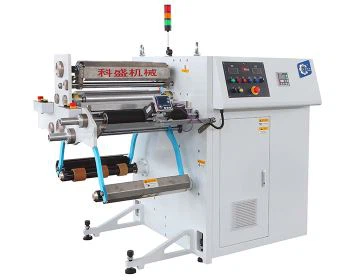
Understanding the maximum speed of the rewinding unit in a plastic film slitting machine is crucial for both manufacturers and users in the plastic film industry. As a supplier of plastic film slitting machines, we are well - versed in the technical details and the factors that influence this important parameter.
The Significance of Rewinding Unit Speed in Plastic Film Slitting Machines
The rewinding unit in a plastic film slitting machine is responsible for taking the sliced plastic film strips and winding them onto cores to form neat and compact rolls. The speed of this rewinding process directly impacts the overall productivity of the slitting machine. A higher rewinding speed can lead to increased output per unit of time, which is essential for large - scale production and meeting market demands promptly.
Moreover, the quality of the rewound film is also closely related to the rewinding speed. If the speed is too high, there may be issues such as uneven winding, wrinkling, or even film breakage. On the other hand, a speed that is too low can reduce efficiency and increase production costs. Therefore, finding the optimum maximum speed is a balancing act that requires careful consideration of multiple factors.
Factors Affecting the Maximum Speed of the Rewinding Unit
1. Film Characteristics
- Thickness: Thicker plastic films generally require lower rewinding speeds. This is because thicker films have more mass and stiffness, which can cause more stress during the rewinding process. For example, when slitting thick films, a Thick film or PET PVC Paper slitting machine KWF - B may need to operate at a relatively slower rewinding speed to ensure that the film is wound smoothly without distortion.
- Material properties: Different plastic materials have different physical and chemical properties. For instance, materials with high elasticity or low friction coefficients may require adjusted rewinding speeds. Some plastics may be more prone to static electricity generation during high - speed rewinding, which can affect the winding quality.
2. Machine Design and Construction
- Drive system: The power and precision of the drive system in the rewinding unit play a vital role in determining the maximum speed. A high - quality drive system can provide sufficient torque to rewind the film at a consistent speed. Our Automatic Slitting Machine is equipped with an advanced drive system that enables it to achieve relatively high rewinding speeds while maintaining stability.
- Tension control: Precise tension control is essential for high - speed rewinding. If the tension is not properly regulated, the film may be wound too tightly or too loosely, leading to quality problems. The advanced tension control mechanisms in our machines are designed to adapt to different film types and rewinding speeds, ensuring a high - quality wound product.
3. Core and Roll Size
- Core diameter: The diameter of the core onto which the film is rewound affects the maximum rewinding speed. A smaller core diameter may limit the speed due to the higher curvature of the film during the initial winding stage. As the roll builds up, the rewinding speed may need to be adjusted accordingly.
- Final roll size: Larger rolls require more careful management of the rewinding speed. As the roll diameter increases, the inertia of the roll also increases, which can put additional stress on the rewinding unit. If the speed is not adjusted properly, it can lead to issues such as roll deformation or loose winding.
Determining the Maximum Speed
In practice, the maximum speed of the rewinding unit is often determined through a combination of theoretical calculations and practical testing. Manufacturers will conduct a series of tests on different film materials and thicknesses to find the optimal speed range for a particular machine model.
For example, our engineers use advanced simulation software to predict the behavior of the rewinding unit at different speeds. These simulations take into account factors such as film properties, machine dynamics, and tension distribution. After the theoretical analysis, we conduct real - world tests in our test facilities. During these tests, we carefully monitor the quality of the rewound film, the vibration and noise levels of the machine, and the overall stability of the rewinding process.
Based on these comprehensive evaluations, we can provide our customers with a recommended maximum speed for each of our machines. For our Mini Slitting Machine, which is designed for smaller - scale production and more flexible operations, the maximum rewinding speed may be different from that of our larger, high - capacity machines.
Impact on Production Costs and Efficiency
Knowing the maximum speed of the rewinding unit is directly related to production costs and efficiency. A higher rewinding speed generally means more film can be processed in a given time period, reducing the unit cost of production. However, running the machine at its maximum speed all the time may not always be the most cost - effective approach.
Operating the machine at excessive speeds can lead to increased wear and tear on the components, which in turn increases maintenance costs. Additionally, if the quality of the rewound film is compromised due to high - speed operation, there may be additional costs associated with rework or product rejection. Therefore, finding the right balance between speed and quality is essential for optimizing production costs and efficiency.
Our Product Range and Rewinding Speeds
We offer a wide range of plastic film slitting machines to meet the diverse needs of our customers. Each machine model has been carefully designed and tested to achieve optimal performance in terms of rewinding speed and quality.
- The Computer Controlled Pet Or OPP Film Slitting Machine is equipped with a state - of - the - art control system that allows for precise adjustment of the rewinding speed. It can handle different types of plastic films, including PET and OPP, and is suitable for medium - to - high - volume production.
- The OPP Film Slitting Machine for Jumbo Roll is specifically designed to handle large - diameter jumbo rolls of OPP film. It has been engineered to achieve high rewinding speeds while maintaining the integrity of the film and ensuring a tight and uniform winding.
Conclusion
In conclusion, the maximum speed of the rewinding unit in a plastic film slitting machine is influenced by multiple factors, including film characteristics, machine design, and core/roll size. As a supplier, we are committed to providing our customers with high - quality machines that offer optimal rewinding speeds for different production needs.
If you are in the market for a plastic film slitting machine or are looking to upgrade your existing equipment, we encourage you to contact us for a detailed consultation. Our team of experts is ready to help you select the right machine and discuss the factors that can affect the rewinding speed to ensure that you achieve the best results in your production process.