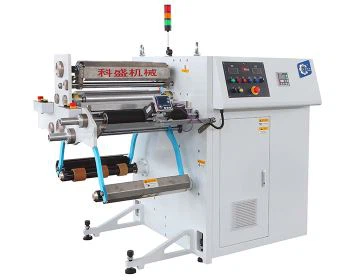
Plastic film slitting machines play a crucial role in the plastic processing industry. They are designed to cut large - width plastic film rolls into smaller, more manageable rolls according to specific requirements. One of the key aspects of a slitting machine is its feeding system, which can significantly impact the machine's efficiency, accuracy, and overall performance.
The Basics of the Feeding System in a Plastic Film Slitting Machine
The feeding system of a slitting machine for plastic film is responsible for delivering the large - scale plastic film rolls to the slitting section in a smooth, stable, and controlled manner. It serves as the starting point for the entire slitting process, and its proper functioning is essential for the quality of the final product.
There are several types of feeding systems commonly used in plastic film slitting machines, each with its own advantages and applications.
Manual Feeding
Manual feeding is the simplest form of the feeding system. In this setup, an operator physically places the plastic film roll on the machine's unwinding shaft and manually guides the leading edge of the film to the slitting section. Manual feeding is often used for small - scale operations or in situations where the production volume is relatively low. It is cost - effective as it does not require complex automation equipment. However, it has some limitations. The process is labor - intensive, and the accuracy and consistency of the feeding speed may vary depending on the operator's skills. This can lead to uneven slitting and potential quality issues in the finished products.
Semi - Automatic Feeding
Semi - automatic feeding systems are an improvement over manual feeding. These systems typically use some mechanical or electrical components to assist in the feeding process. For example, a semi - automatic system may have motor - driven rollers that help to pull the plastic film from the roll and transport it towards the slitting knives. The operator is still required to load the film roll and initiate the feeding process, but the machine takes care of the continuous and regulated movement of the film. This type of feeding system increases the productivity compared to manual feeding and offers better control over the feeding speed. It is suitable for medium - scale plastic film slitting operations.
Automatic Feeding
Automatic feeding systems are the most advanced and efficient option for plastic film slitting machines. In an automatic feeding setup, the entire process of loading the film roll, starting the feeding, and adjusting the feeding parameters is carried out by the machine itself. These systems often incorporate sensors, controllers, and servo motors. The sensors can detect the film's position, tension, and width, and the controllers can adjust the feeding speed and tension accordingly. This ensures a highly accurate and consistent feeding process, which is vital for high - volume production and high - quality slitting. Automatic feeding systems are commonly used in large - scale industrial applications where precision and productivity are of utmost importance.
Key Components of the Feeding System
Unwinding Shaft
The unwinding shaft is the part where the large plastic film roll is mounted. It needs to be strong enough to support the weight of the roll and rotate smoothly. In some advanced feeding systems, the unwinding shaft can be equipped with a braking mechanism to control the unwinding speed and prevent the film from unrolling too quickly.


Rollers
Rollers are essential components of the feeding system. They are used to guide the plastic film along the feeding path and control its tension. There are different types of rollers, such as drive rollers and idler rollers. Drive rollers are powered by motors and are responsible for pulling the film forward. Idler rollers, on the other hand, simply support the film and help to maintain its proper alignment.
Tension Control Unit
Tension control is a critical aspect of the feeding system. If the tension is too high, the plastic film may stretch or break. If the tension is too low, the film may wrinkle or cause uneven slitting. The tension control unit uses various methods, such as pneumatic or hydraulic systems, to adjust the tension of the film during the feeding process. It continuously monitors the tension and makes necessary adjustments to ensure a consistent and appropriate tension level.
Width Measuring Device
A width measuring device can be integrated into the feeding system to measure the width of the plastic film. This is important for ensuring that the film is fed accurately and that the slitting is carried out at the correct positions. The width measuring device can use sensors, such as laser sensors or optical sensors, to measure the film's width and provide feedback to the control system.
Our Company's Offerings in Plastic Film Slitting Machines
As a leading supplier of Plastic Film Roll Slitting Machine, we understand the importance of a reliable and efficient feeding system. Our machines are equipped with state - of - the - art feeding systems that are designed to meet the diverse needs of our customers.
For those who require a cost - effective solution for small - scale production, our manual and semi - automatic feeding systems are perfect choices. These systems are easy to operate and maintain, and they can still provide satisfactory slitting results.
If you are involved in large - scale industrial production, our Automatic Slitting Machine with an advanced automatic feeding system is the ideal option. It offers high precision, high productivity, and consistent quality.
Our Flexible Packaging Film Slitting Machine is specifically designed to handle different types of flexible packaging films. The feeding system in this machine is optimized to ensure smooth and accurate feeding of these delicate films.
Similarly, our Plastic Films Roll Slitting Machine and Plastic Film Jumbo Roll Slitting Machine are equipped with feeding systems that can handle large - diameter and wide - width plastic film rolls. They are capable of maintaining stable feeding even under heavy - load conditions.
Importance of Choosing the Right Feeding System
Selecting the appropriate feeding system for your plastic film slitting machine is crucial. It can have a direct impact on the production efficiency, product quality, and overall cost of your operation.
A well - designed feeding system can reduce the need for manual intervention, which in turn reduces labor costs and the risk of human error. It can also improve the accuracy of the slitting process, resulting in higher - quality finished products. For example, an automatic feeding system with precise tension control can ensure that the plastic film is slit evenly, with minimal waste and a high yield rate.
Moreover, the right feeding system can increase the machine's productivity. By providing a continuous and stable supply of plastic film, it allows the slitting machine to operate at a higher speed without compromising on quality. This is particularly important for businesses that need to meet high - volume production demands.
Getting in Touch for Your Plastic Film Slitting Needs
If you are in the market for a plastic film slitting machine or want to upgrade your existing feeding system, we are here to help. Our team of experts can provide you with detailed information about our products, including the features and benefits of different feeding systems. We can also offer customized solutions based on your specific requirements.
Contact us today to start a discussion about your plastic film slitting needs. Our professionals will work with you to understand your production goals and recommend the most suitable feeding system and slitting machine for your business.