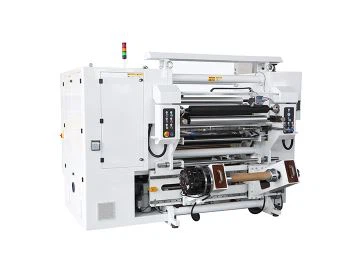
In the field of material handling, the relationship between rewinding speed and material tension is a crucial topic that directly impacts the quality and efficiency of the rewinding process. As a reputable supplier of Reversible Rewinding Machines, we have in - depth knowledge of this area and would like to share some insights with our readers.
Understanding Material Tension and Rewinding Speed
Material tension refers to the force applied to the material during the rewinding process. It is essential to maintain proper tension to ensure that the material is wound evenly, without wrinkles, creases, or excessive stretching. On the other hand, rewinding speed is the rate at which the material is wound onto the reel.
When the rewinding speed is low, the tension on the material is generally more stable. At low speeds, there is less inertial force acting on the material, which means that it is easier to control the tension. The motor and control system of the rewinding machine can more accurately adjust the force applied to the material, resulting in a more consistent winding quality. For example, in applications where high - precision winding of thin materials, such as micro - film, is required, a low rewinding speed can help to prevent the film from tearing or deforming due to uneven tension.
However, low rewinding speed also has its drawbacks. It significantly reduces the production efficiency. In a large - scale manufacturing environment, time is money, and a slow rewinding process can lead to increased production costs and longer delivery times.


As the rewinding speed increases, the situation becomes more complex. Higher speeds generate greater inertial and centrifugal forces, which can cause fluctuations in the material tension. These fluctuations can lead to a variety of problems. Firstly, the material may be wound unevenly, with some areas being tighter than others. This can result in a non - uniform appearance of the wound roll. Secondly, if the tension becomes too high, it can cause the material to stretch or even break. Conversely, if the tension drops too low, the material may become loose and develop wrinkles during the winding process.
Impact on Different Types of Materials
Different materials respond differently to changes in rewinding speed and tension. For instance, flexible materials like plastic films are more sensitive to tension variations. When using a Mini High Speed Two Way Automatic Rewinding and Doctor Machine for Plastic Film, the high - speed operation needs to be carefully balanced with tension control. Plastic films are prone to stretching and wrinkling, so maintaining an appropriate tension is crucial to ensure the quality of the wound roll.
On the other hand, more rigid materials such as paperboard can tolerate higher tensions to a certain extent. However, even for paperboard, excessive rewinding speed can cause problems. At high speeds, the edges of the paperboard may become frayed, or it may not be wound as neatly as desired. An Automatic High - speed Single - side Inkjet Printing Inspection Rewinding Machine used for paperboard may need to adjust the speed - tension relationship based on the specific properties of the paperboard, such as its thickness and stiffness.
Our Reversible Rewinding Machine Solutions
Our Reversible Rewinding Machine is designed to address the challenges associated with the relationship between rewinding speed and material tension. It is equipped with advanced tension control systems that can automatically adjust the tension based on the rewinding speed. This allows for a more stable and consistent winding process, regardless of whether the machine is operating at low or high speeds.
The machine's reversible feature also provides additional flexibility. It can wind the material in both directions, which is particularly useful in applications where the material needs to be processed from different angles. For example, in some printing and packaging industries, the ability to rewind the material in reverse can help to correct any minor tension or alignment issues that may occur during the initial winding process.
In addition, our Double Side Mini Rewinding Machine for Flim and Automatic High - speed Double - side Inkjet Printing Inspection Rewinding Machine offer high - precision tension control capabilities. These machines are equipped with state - of - the - art sensors that continuously monitor the material tension and send feedback to the control system. The control system then makes real - time adjustments to the motor speed and other relevant parameters to ensure optimal tension throughout the rewinding process.
The Importance of Optimizing Speed - Tension Relationship
Optimizing the relationship between rewinding speed and material tension is not only about ensuring the quality of the wound product but also about maximizing the overall efficiency of the production process. By finding the right balance, manufacturers can increase their production output without sacrificing product quality.
For example, in a continuous production line, if the rewinding speed is set too low, the entire line may be operating below its maximum capacity. However, if the speed is increased without proper tension control, the number of defective products may rise, leading to increased waste and costs.
Contact Us for Quality Rewinding Solutions
If you are in the market for a reliable rewinding machine that can effectively manage the relationship between rewinding speed and material tension, look no further. Our company specializes in providing high - quality rewinding machines that are engineered to meet the diverse needs of various industries. Whether you are dealing with plastic films, paper products, or other materials, our machines can help you achieve optimal winding results.
Feel free to reach out to us for more information, product demonstrations, or to discuss your specific requirements. We are committed to helping you find the best rewinding solution for your business.