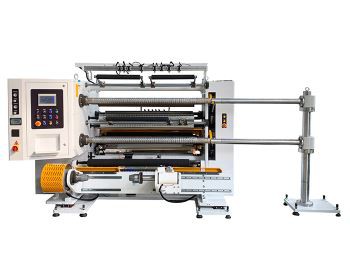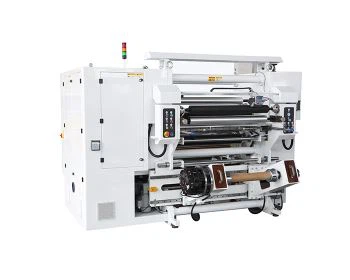
Hey everyone, if you've ever been in the market for roll processing equipment, you've probably found yourself Googling stuff like "what's the weight of an automatic slitting machine" at 2 a.m. I get it-when you're planning a warehouse layout, loading docks, or even just figuring out how to get a big machine through a door, weight is non-negotiable. As a slitting machine supplier, I field this question at least three times a week, and it's never a one-size-fits-all answer. Let's break this down like we're chatting over a quick coffee, no jargon overload.
First off, let's start with the basics: what even is an automatic slitting machine? For anyone new here, these bad boys cut large, unwieldy roll materials (think plastic film, paper, foil, even stuff like optical film) into narrower, more usable rolls. The weight depends so much on what you're slitting, how precise you need to be, and what extra features you throw in. It's not like buying a toaster where one size fits all-these machines are built for specific jobs, so their weight shifts right along with that.
Let's talk about the smallest, most basic automatic slitters first. If you're handling lighter materials like thin paper, basic plastic film, or low-tension stretch film, you're looking at entry-level models. I've seen these tip the scales anywhere from 1,500 lbs (that's about 680 kg if you're metric) up to 4,000 lbs (1,814 kg). These compact setups are perfect for small workshops or businesses just starting out-they don't take up a ton of floor space, and they're easier to move if you need to rearrange your shop.
But wait, step things up to mid-range models, and the weight jumps. These are for businesses handling medium-thickness materials, like thicker plastic sheeting, some paper grades, or standard stretch film. A mid-range automatic slitting machine here will usually land between 6,000 lbs (2,722 kg) and 12,000 lbs (5,443 kg). Why so heavy? Because they have bigger, sturdier frames to handle higher tension, more advanced control systems, and wider roll capacity. If you're looking for a solid workhorse that doesn't break the bank but still gets consistent cuts, this is the sweet spot for most small to mid-sized manufacturers.


Now, if you're in the industrial big leagues-like processing heavy-duty materials, ultra-precision products, or high-volume runs-you're looking at heavy-duty, custom automatic slitting machines. These can weigh anywhere from 15,000 lbs (6,804 kg) all the way up to a staggering 40,000 lbs (18,144 kg). I'm talking about models for cutting thick plastic sheets, heavy aluminum foil, or optical film that needs perfect, micro-level cuts. The extra weight here comes from reinforced frames, precision slitting heads with tight tolerances, heavy-duty unwinder/rewinder shafts, and advanced automation features like auto-logging, defect detection, and web guiding. This isn't a machine you move around often-this is a permanent warehouse floor fixture built to run 24/7.
Wait, but let's get specific because not all automatic slitting machines are the same. If you're into plastic film-super common in packaging, labeling, and even automotive parts-this is where the weight really varies. Our Precision Automatic Plastic Film Paper Roll Slitting Machine, for example, is built for tight tolerance work on both thin films and paper. It clocks in around 8,000 lbs (3,628 kg) for a 60-inch width model, which is the most popular size for most packaging operations. If you need something wider-say 100 inches for industrial roll goods-you're looking at closer to 11,000 lbs (4,990 kg). Our Slitting Machine for Plastic Flim (I know, typo in the old link, we fixed that on our end) is another option for businesses focused solely on plastic film; its weight ranges from 5,500 lbs for narrow web (10-inch) models up to 10,000 lbs for full-width industrial ones.
If you're dealing with paper, the weight leans a little on the lower end for the same width, right? Paper is a bit less tension-heavy than thick plastic, so a paper-focused automatic slitter of the same width might be 10-15% lighter. That said, precision paper slitting for things like books or labels needs just as much accuracy, so you still can't skimp on frame rigidity. For optical film-super sensitive, used in screens, solar panels, and medical devices-you need a machine that can handle ultra-thin, delicate material without stretching or damaging it. Our Optical Film Slitting Machine is engineered with low-tension systems and precision slitting heads, and its weight falls between 7,000 lbs and 9,500 lbs. It's heavier than basic plastic slitters because of the extra stability needed to avoid any material movement during the cut.
Stretch film is another big one, especially for packaging and logistics. A lot of people ask about our Stretch Film Slitting Rewinding Machine, which is designed specifically for stretch wrap-think pallet wrap, hand wrap, machine wrap. These need to balance tension, flexibility, and consistent roll width, so their weight is a bit unique. Smaller stretch film slitters for hobby or small batch use are around 2,000 lbs, while large industrial ones that make bulk stretch rolls hit about 8,500 lbs. That weight is all about the rewinder system, which needs to hold tight tension on stretch film to keep it from getting too loose or too tight during slitting.
Now, let's talk about what actually affects the weight beyond the material you're slitting. Size is a huge factor-wider machines have bigger frames, longer shafts, more slitting heads, so they're automatically heavier. A 20-inch slitter is way lighter than a 120-inch one, no question. Features add up too: auto-knife grinding, defect tracking, touchscreen controls, auto-load/unload systems-all that extra hardware adds pounds. Even the type of slitting mechanism matters: razor slitting is lighter (good for thin, soft materials like plastic film), while rotary shear slitting or score slitting needs heavy-duty heads that add more weight for stability.
Also, don't forget about installation! A lot of new buyers don't realize that when they get a big automatic slitting machine, it's not just a crate you roll into place. The heavy-duty models over 10,000 lbs usually need forklifts with specialized attachments, sometimes even riggers, to get it off the truck and into the factory. You can't just back a pallet jack up to it-trust me, I've seen that go wrong more than once. So when you're planning for weight, don't just think about the machine itself, but also how you're gonna move it.
As a supplier, I always tell customers to be upfront about their needs, not just the weight. If you're a small print shop that cuts paper labels, you don't need a 20,000 lb heavy-duty slitter-you'll waste floor space and money. If you're a packaging plant running 24/7 cutting plastic film for soda bottles, you need something heavy enough to handle high volume without vibration. Our Plastic Film Roll Slitting Machine line is set up to cover both ends: compact entry-level for small shops, mid-range for medium manufacturers, and heavy-duty for big industrial runs.
Wait, let's address a common myth I hear all the time: "heavier means better." Not exactly, but it usually means more stability. A lightweight slitter might work for thin, low-tension material, but if you're running thick, high-tensile plastic, a flimsy frame will vibrate, leading to uneven cuts and wasted material. That said, if you're using thin film, a heavier machine is just extra weight you don't need-you'll pay more for shipping and installation than you have to. So the sweet spot is matching the machine's weight to your exact application.
Let me give you a real example from last year. A customer came to us asking about automatic slitting machines, said he thought he needed a 10,000 lb model. Turns out he was cutting 20-inch wide paper for greeting cards, running 500 rolls a day. We recommended our compact Precision Automatic Plastic Film Paper Roll Slitting Machine, which weighed just under 5,000 lbs. It handled his speed, the paper was cut perfectly, and he saved $15,000 on shipping and installation because we didn't need riggers. He was shocked at how much weight difference mattered for his use case.
Another example: a solar panel manufacturer came to us needing to slit optical film for their panels. They had a previous machine that was too light, and the cuts were off by 0.1 mm, which ruined whole batches. We hooked them up with our Optical Film Slitting Machine, which is built with a reinforced frame that keeps vibration under 0.05 mm, and it weighs 8,200 lbs. The precision they needed? They got it, and their defect rate dropped by 40% right away. That's where weight matters-for consistent, high-quality cuts.
So, to wrap this up, there's no magic number for the weight of an automatic slitting machine. It ranges from about 1,500 lbs for entry-level small jobs up to 40,000 lbs for heavy-duty industrial applications. The biggest factors are the material you're slitting, the width of the rolls, the precision level you need, and the extra automation features you want.
If you're shopping around and still not sure what size or weight is right for you, feel free to reach out. We don't push the biggest, heaviest machine just because it's our best seller-we help you find the one that fits your budget, your space, and your production needs. Whether you're looking for a basic Slitting Machine for Plastic Flim, a precision model for paper, or something specialized like an Optical Film Slitting Machine or Stretch Film Slitting Rewinding Machine, we've got options across the weight spectrum to match your work. No guessing, no overpaying, just a machine that works for your business.
Don't hesitate to connect with our team to get a tailored quote and talk through all the details-we're here to answer all your questions, including the ones you didn't even know you had yet.