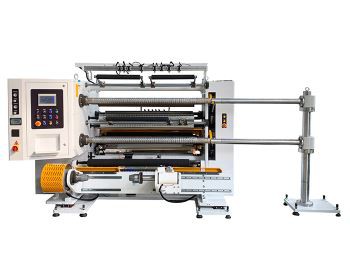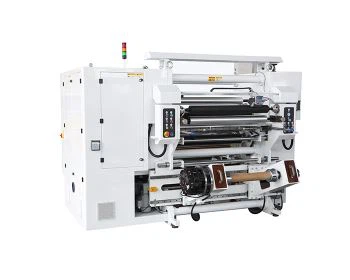
If you've ever spent hours hand-trimming waste from a roll of film, paper, or nonwoven material, you know how frustrating it is to watch that valuable material get tossed-especially when a more efficient, automated solution exists. As a Vertical Automatic Rewinding Machine supplier, I've spent years walking customers through how this equipment doesn't just wind rolls neatly; it systematically cuts down on material waste at every stage of the rewinding process. Let's break down how these machines work to reduce waste, and why they're a game-changer for anyone tired of losing product to avoidable trimming and errors.
First, it helps to understand what vertical automatic rewinding actually does, versus older horizontal rewinding methods or small, manual units that many operations rely on. A vertical rewinder positions rolls vertically during processing, which eliminates the sagging and misalignment that's common with horizontal setups. That structural stability is foundational to waste reduction, because misalignment is one of the top causes of uneven edges, stretched material, and wasted sections at roll ends. But it's the integrated smart features of modern vertical machines that really drive waste out of the process.
One of the most impactful waste-reduction tools is the inline inspection and real-time defect correction system. Unlike older machines that only check rolls after they're fully wound, vertical automatic rewinders use high-resolution cameras and sensory scanners mounted right at the unwinding and slitting stations. These scanners pick up everything from tiny ink smudges on plastic film to micro-tears in nonwoven material, or off-cut edges that result from slitting misalignment. The key here is that the machine doesn't just flag defects-it can adjust on the fly. For example, if a 1mm-wide defect is detected 100 meters into a 1,000-meter roll, the machine can adjust the slitting blades to skip that small section automatically, rather than requiring the entire roll to be discarded. That's a huge win compared to manual rewinding, where a single small defect might lead an operator to toss a full 1,000-meter roll because they can't be bothered to hand-trim around it.
This level of precision is especially critical for industries like flexible packaging, where plastic film is one of the most expensive raw materials. A common question I get from packaging manufacturers is, "How much waste can a vertical rewinder actually save?" In my experience working with customers, we've seen waste drop by 15-25% on average when switching from manual or basic horizontal machines to vertical automatic units. That adds up fast: for a customer producing 100,000 meters of plastic film rolls a month, that's 15,000 to 25,000 meters of material that would have been wasted, kept in production, and turned into revenue instead of trash. If you're looking for a smaller option for lower-volume runs, our Small Rewinding Machine is designed to bring that same precision to operations that don't need full industrial-scale capacity. It packs the inline inspection features into a compact footprint, so you still cut waste without overinvesting in equipment you won't use.
Another major source of material waste in rewinding is core misalignment and roll tension control. If a roll is wound too tight, material stretches, thins, and can tear during handling or conversion; too loose, and it shifts, develops wrinkles, and creates uneven edges that have to be trimmed away. Vertical automatic rewinders use closed-loop tension control systems that adjust dynamically based on the material type, width, and speed of the run. For example, when winding thin plastic film, the tension is calibrated to be lower at the start of the roll to avoid stretching, and slightly higher as the roll builds to keep it compact without damaging the material. This eliminates the wasted sections caused by over- or under-tensioned rolls-something that plagues many manual rewinding operations, where operators have to guess at tension settings and often make adjustments mid-run that lead to waste.
For customers working specifically with plastic film, our Plastic Film Rewinding Machines take this a step further with proprietary tension mapping tailored to thin, flexible substrates. Thin film is particularly prone to edge curl and stretching, which leads to waste when it's used for packaging, labels, or other applications. The vertical design allows the machine to support the full width of the roll as it winds, so even ultra-thin films stay flat and aligned, reducing edge curl that would require trimming 5-10mm off each side of the roll. That's another small per-roll saving that adds up to thousands of meters of material a year for high-volume customers. We also have options for Mini Rewinding Machine setups, perfect for prototyping or small-batch runs where you don't want to waste material while testing new film recipes or product lines.
Slitting errors are another top cause of waste in the rewinding process. When you're slitting a wide parent roll into multiple narrower finished rolls, misaligned blades can leave uneven edges, or cut slightly off-target, leading to finished rolls that don't meet width specifications and have to be discarded. Vertical automatic rewinders use servo-driven slitting blades that are calibrated to within 0.1mm accuracy, and can adjust blade position across the full width of the roll in real time. If a parent roll has minor thickness variations, the machine can adjust the blade spacing to compensate, so every finished roll is within tolerance-no wasted rolls due to slitting misalignment. That's a big difference from manual slitting, where operators typically leave a 2-3mm "trim edge" on each side of the roll to account for slitting errors, which becomes significant waste when you're producing thousands of rolls. The Vertical Type Slitter Rewinder Machine for Plastic is designed specifically for this application, integrating precise slitting and vertical winding to minimize that trim waste entirely.
Waste isn't just about material, either-though raw material is the biggest cost driver. Time waste also leads to indirect material waste, because when operators have to stop a manual rewinding machine every 10 minutes to trim defects or adjust settings, material is sitting idle and being handled, leading to more accidental tears or damage. Vertical automatic rewinders run at consistent, optimized speeds (often 2-3 times faster than manual operations) with minimal stops. When they do flag a defect, they can either cut around it automatically or divert the defective section to a separate roll for reprocessing, rather than stopping the entire run. For example, if a small section of a roll has an ink smudge, the machine will cut that section, wind it onto a smaller "defect roll" that can later be reprocessed or trimmed, while the rest of the good material continues winding without interruption. That means less time spent handling material, fewer damaged sections, and far less waste than manual operations where a single stop can lead to an entire roll being compromised.
One common misconception I hear is that automated rewinding machines only work for high-volume, large-scale operations. That's not true-even small businesses can benefit from reduced waste. For example, a local label printing shop that produces custom rolls for small businesses might only run a few hundred meters a day, but every meter saved on waste adds to their profit margin. We've had customers switch from manual rewinding to our Inkjet Print Rewinding Machine, designed for printed rolls, and seen their waste drop by 12% on custom runs, because the inline scanners pick up print defects before the entire roll is wasted. The compact design means it fits in a small shop, without the footprint of a full industrial rewinder.
Another way vertical automatic rewinders reduce waste is through smart roll routing and inventory management. Modern machines are connected to software that tracks every roll's length, width, defects, and material type. That means when it's time to fulfill a customer order, the machine can pull a finished roll that has minimal defects, or even splice two smaller good sections together to make a full-length roll, rather than using a roll with a minor defect that would require it to be sold at a discount or discarded. For example, if you have two 500-meter rolls, each with a 10-meter defective section, the machine can splice the 490 meters of good material from each roll to make one 980-meter full roll, instead of wasting both defective sections. That's a small detail, but it's a feature that many manual operations don't have access to, and it reduces waste significantly for businesses that handle small, custom orders.
Now, let's talk about common pitfalls that still lead to waste, even with vertical automatic rewinders. One mistake I see customers make is not calibrating the machine to their specific material. Every material-whether it's 100-micron plastic film, 500-micron paper, or nonwoven fabric-has different tension requirements, stretch rates, and defect patterns. If you set a generic tension or inspection threshold, you'll end up with unnecessary waste from either overtightening or missing small defects. That's why we work with every customer to run test rolls on their specific material before delivery, and offer on-site calibration support to make sure the machine is set up for their exact product. It's a step that might seem trivial, but it's the difference between a machine that cuts waste by 25% and one that only cuts waste by 5%.
Another pitfall is not training operators to use the machine's advanced features. Even the smartest vertical rewinder won't reduce waste if operators are only using it for basic winding and ignoring the defect correction or roll splicing tools. We offer hands-on training for every customer, and our support team is available to help adjust settings, optimize run speeds, and troubleshoot any issues that might lead to waste. I've had customers tell me after a month of using the machine that they realized they'd been underutilizing the defect scanner feature, and once they started using it consistently, their waste dropped another 5%-all without investing in new equipment.
So, how does all of this add up for your business? The numbers speak for themselves. For a mid-sized flexible packaging manufacturer running 1 million meters of plastic film a year, a 20% waste reduction is 200,000 meters of material saved. At $2 per meter, that's $400,000 in annual savings-enough to offset the cost of a vertical automatic rewinder in less than two years, and then add to your bottom line indefinitely. For smaller operations, the savings might be smaller in total, but as a percentage of revenue, they're often much higher, because small businesses have less buffer for waste.


If you're currently dealing with avoidable material waste from rewinding operations, or you're ready to upgrade from manual or outdated equipment to something more efficient, I'd be happy to talk through your specific needs. Our team has worked with customers across industries-from packaging and printing to medical materials and nonwovens-to tailor vertical automatic rewinding solutions that cut waste, improve product quality, and boost profitability. Whether you need a compact unit for small-batch runs or a full-scale machine for high-volume production, we can help you find the right fit. Don't let valuable material go to waste when a small upgrade to your rewinding process can deliver big results. Reach out to our team to learn more about our range of rewinding solutions, including the Small Rewinding Machine, Plastic Film Rewinding Machines, Mini Rewinding Machine, Vertical Type Slitter Rewinder Machine for Plastic, and Inkjet Print Rewinding Machine, and let's discuss how we can help reduce your waste and improve your operations.