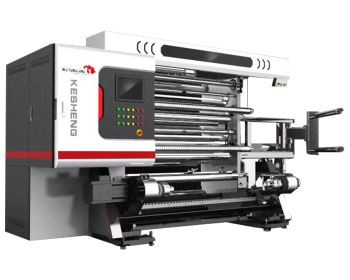
In the dynamic landscape of industrial machinery, High Speed Slitting Rewinding Machines stand as crucial equipment for various industries, including plastics, textiles, and labeling. These machines are designed to convert large master rolls of materials into smaller, more manageable rolls with high precision and speed. One of the key components that determine the performance and efficiency of a High Speed Slitting Rewinding Machine is its motor. As a leading supplier of High Speed Slitting Rewinding Machines, we understand the importance of selecting the right motors for these machines. In this blog, we will explore the different types of motors used in High Speed Slitting Rewinding Machines, their characteristics, and the factors to consider when choosing the appropriate motor.
Types of Motors Used in High Speed Slitting Rewinding Machines
AC Induction Motors
AC induction motors are one of the most commonly used motors in High Speed Slitting Rewinding Machines due to their simplicity, reliability, and cost - effectiveness. These motors operate on the principle of electromagnetic induction, where the rotating magnetic field in the stator induces a current in the rotor, causing it to rotate.
-
Advantages:
- Robustness: AC induction motors are known for their durability and can withstand harsh industrial environments. They have a simple construction with no brushes, which reduces the need for frequent maintenance.
- Wide Range of Speeds: These motors can operate at a wide range of speeds, making them suitable for different slitting and rewinding processes. By using variable frequency drives (VFDs), the speed of the motor can be easily adjusted to meet the specific requirements of the application.
- Cost - Effective: AC induction motors are relatively inexpensive compared to other types of motors, making them an attractive option for budget - conscious customers.
-
Disadvantages:
- Limited Speed Control Precision: While VFDs can be used to control the speed of AC induction motors, the speed control precision may not be as high as that of other motor types, such as servo motors.
- Low Torque at Low Speeds: AC induction motors tend to have lower torque at low speeds, which may limit their performance in applications that require high torque at start - up or during low - speed operations.
Servo Motors
Servo motors are widely used in High Speed Slitting Rewinding Machines when high precision and dynamic performance are required. These motors are controlled by a closed - loop feedback system, which compares the actual position, speed, or torque of the motor with the desired values and adjusts the input to the motor accordingly.
-
Advantages:
- High Precision: Servo motors offer excellent speed and position control accuracy, which is crucial for achieving precise slitting and rewinding results. They can follow complex motion profiles with minimal error, ensuring consistent quality of the finished products.
- High Torque at Low Speeds: Servo motors can provide high torque even at low speeds, allowing them to handle heavy loads and start - up smoothly. This makes them suitable for applications that involve rapid acceleration and deceleration.
- Dynamic Response: Servo motors have a fast dynamic response, meaning they can quickly adapt to changes in the load or operating conditions. This enables the High Speed Slitting Rewinding Machine to operate efficiently and with high productivity.
-
Disadvantages:
- High Cost: Servo motors are generally more expensive than AC induction motors, mainly due to their advanced control systems and high - quality components.
- Complexity: The closed - loop control system of servo motors is more complex than that of AC induction motors, requiring more expertise for installation, tuning, and maintenance.
Stepper Motors
Stepper motors are another type of motor used in High Speed Slitting Rewinding Machines, especially in applications where precise positioning is required. These motors rotate in discrete steps, each step corresponding to a specific angle of rotation.
-
Advantages:
- Precise Positioning: Stepper motors can provide accurate positioning without the need for a feedback system, making them suitable for applications where cost - effective positioning is required.
- Low - Cost: Stepper motors are relatively inexpensive compared to servo motors, making them an attractive option for small - scale or budget - limited projects.
- Simple Control: The control of stepper motors is relatively simple, usually requiring only a pulse signal to control the motor's rotation. This makes them easy to integrate into the control system of the High Speed Slitting Rewinding Machine.
-
Disadvantages:
- Limited Speed and Torque: Stepper motors have a limited speed range and torque output compared to servo motors and AC induction motors. They are not suitable for applications that require high - speed or high - torque operations.
- Resonance Issues: Stepper motors may experience resonance problems at certain speeds, which can cause vibration and reduce the performance of the machine.
Factors to Consider When Choosing a Motor for a High Speed Slitting Rewinding Machine
Speed Requirements
The speed requirements of the High Speed Slitting Rewinding Machine depend on the type of material being processed, the desired production rate, and the slitting and rewinding process. For applications that require high - speed operations, such as High Speed Plastic Film Slitter Rewinder Machine, servo motors or AC induction motors with VFDs are usually the preferred choice due to their ability to operate at high speeds.
Torque Requirements
The torque requirements of the motor depend on the load characteristics of the High Speed Slitting Rewinding Machine, including the weight of the material, the tension control requirements, and the acceleration and deceleration requirements. Applications that involve heavy loads or rapid acceleration and deceleration, such as 1300 Width Jumbo Roll Slitting Machine For Plastic, require motors with high torque output, such as servo motors or AC induction motors with high - torque capabilities.
Precision Requirements
The precision requirements of the High Speed Slitting Rewinding Machine depend on the quality standards of the finished products. Applications that require high precision, such as Vertical Automatic High Speed Fabric Roll Slitting Machine, typically use servo motors due to their excellent speed and position control accuracy.
Cost Considerations
The cost of the motor is an important factor to consider, especially for small - scale or budget - limited projects. AC induction motors are generally the most cost - effective option, followed by stepper motors. Servo motors are the most expensive but offer the highest performance and precision.

Maintenance Requirements
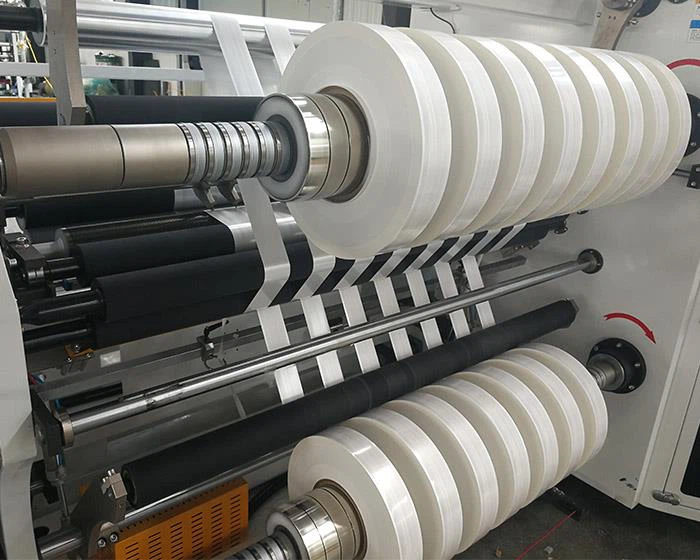
The maintenance requirements of the motor also need to be considered. AC induction motors have a simple construction and require less maintenance compared to servo motors and stepper motors, which have more complex control systems and components.
Conclusion
In conclusion, the choice of motor for a High Speed Slitting Rewinding Machine depends on several factors, including speed requirements, torque requirements, precision requirements, cost considerations, and maintenance requirements. As a supplier of High Speed Slitting Rewinding Machines, we offer a range of machines equipped with different types of motors to meet the diverse needs of our customers. Whether you need a machine for Vertical Plastic Film Slitting and Rewinding Machine or Bottle Label Slitting Machine, we can provide you with the most suitable solution.
If you are interested in purchasing a High Speed Slitting Rewinding Machine or have any questions about the motors used in these machines, please feel free to contact us. Our team of experts will be happy to assist you and provide you with detailed information and technical support.