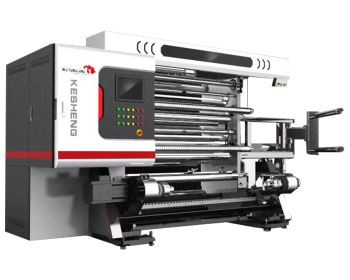
Yo! As a supplier of High Speed Slitting Rewinding Machines, I often get asked about how to check the electrical insulation of these machines. It's a crucial part of maintenance, so I thought I'd share some insights on this topic.
First off, why is checking electrical insulation so important? Well, a High Speed Slitting Rewinding Machine operates at high speeds and involves a lot of electrical components. If the electrical insulation is compromised, it can lead to all sorts of problems, like short - circuits, electrical shocks, and even machine breakdowns. That's definitely not something you want, especially when you're running a production line that relies on these machines.


Let's start with the basic tools you'll need. You're going to need an insulation resistance tester, also known as a megger. It's a simple yet effective device that measures the resistance of the electrical insulation. You can pick one up from any good electrical tools store.
Before you start testing, make sure the machine is completely powered off. This might seem like a no - brainer, but you'd be surprised how many accidents happen because people forget to do this. Also, disconnect the machine from the power source to avoid any electrical hazards.
Now, locate the electrical components that you want to test. In a High Speed Slitting Rewinding Machine, this could include motors, control panels, and wiring. The insulation of these components can deteriorate over time due to factors like heat, moisture, and mechanical stress.
Let's say we're testing a motor. First, clean the motor terminals. Dirt, dust, and moisture can affect the test results, so it's important to have them as clean as possible. Connect the leads of the megger to the motor terminals. The megger has two leads: one for the positive terminal and one for the negative terminal. Make sure the connections are secure.
Once the connections are made, turn on the megger. The megger will send a small, safe electrical current through the insulation and measure the resistance. The higher the resistance, the better the insulation. A good rule of thumb is that the insulation resistance should be at least 1 megohm. If the resistance is lower than this, it could indicate a problem with the insulation.
If you're testing the wiring in the machine, you'll need to do it section by section. This is because the wiring runs throughout the machine, and a single faulty section can affect the entire system. Start by identifying individual wires or cable bundles. Disconnect one end of the wire or bundle from the circuit. This will isolate the section you're testing.
Connect the megger to the two ends of the isolated wire or bundle. Again, turn on the megger and take the reading. If you find a low - resistance section, you'll need to investigate further. It could be due to damaged insulation, a loose connection, or water ingress.
The control panel is another important component to test. The control panel houses the electrical circuits that control the operation of the machine. To test the insulation in the control panel, open the panel door (make sure the power is off, of course). Locate the circuit boards, relays, and other electrical components.
Use a non - conductive brush to gently clean the components. This will remove any dust or debris that could interfere with the test. Connect the megger to the appropriate terminals on the components. Take readings for each component and record them. If you notice any low - resistance readings, you may need to replace the component or repair the insulation.
Now, let's talk about some common issues you might encounter during the insulation check. One common problem is moisture. High Speed Slitting Rewinding Machines are often used in industrial environments where there might be high humidity or even water splashes. Moisture can seep into the electrical components and reduce the insulation resistance.
If you suspect moisture is the problem, you can try drying out the components. You can use a heat gun on a low setting to gently warm the components and evaporate the moisture. However, be careful not to overheat the components, as this can cause further damage.
Another issue is mechanical damage. The machine is constantly in motion, and the wiring and components can get damaged due to vibrations, rubbing against other parts, or accidental impacts. If you find any signs of physical damage to the insulation, such as cuts or abrasions, you'll need to repair or replace the affected parts.
As a supplier, I understand the importance of having a well - maintained High Speed Slitting Rewinding Machine. That's why we offer a range of high - quality machines that are built to last. For example, our 1300 Width Jumbo Roll Slitting Machine For Plastic is designed for efficient plastic film slitting. We also have the Jumbo Roll Slitting Machine, which is great for handling large - scale slitting tasks.
Our Slitting Machine for Plastic Flim is specifically engineered to provide precise cuts for plastic films. And if you're dealing with paper, our Air Shaft Jumbo Roll Paper Slitting Machine is a perfect choice. Plus, we have the Automatic High Speed Packaging Film Slitting Machine, which is ideal for high - speed packaging film production.
If you're in the market for a High Speed Slitting Rewinding Machine or have any questions about electrical insulation testing, feel free to reach out. We're here to help you make the right choice and keep your machines running smoothly.
In conclusion, checking the electrical insulation of a High Speed Slitting Rewinding Machine is an essential part of maintenance. By following these steps and being aware of the common issues, you can ensure the safety and reliability of your machine. So, don't neglect this important task and keep your production line up and running.