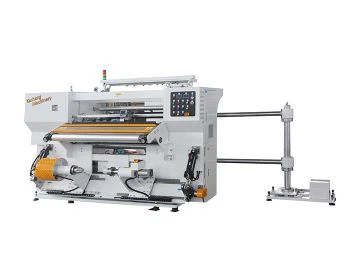
If you're running a PET film processing operation-whether you're producing packaging, labels, industrial laminates, or optical films-you know how much time and energy are lost to manual transfers between production stages. For years, slitting machines for PET film were seen as standalone units: you'd run a jumbo roll through a slitter, take the finished slit rolls off via forklift or hand, move them to a separate rewinder, printer, or lamination line, and deal with bottlenecks, quality gaps, and wasted labor at every handoff. As a supplier of PET film slitting solutions, I get asked this question almost weekly: Can a slitting machine for PET film really be integrated with other production equipment? The short answer is yes-integrating slitting lines with upstream and downstream machinery isn't just possible-it's already standard for operations looking to boost efficiency, reduce waste, and improve consistency. Over the last decade, we've worked with dozens of clients to tailor integrated setups, and I've seen first-hand how this shift transforms production workflows, cuts operational costs, and addresses the unique needs of PET film processing.
First, let's ground this in the core challenges of working with PET film. PET (polyethylene terephthalate) is prized for its clarity, chemical resistance, and tensile strength, but it's also sensitive to tension, temperature, and edge quality. A single misalignment during slitting, or a delay between slitting and the next process, can cause the film to stretch, wrinkle, or develop static charge-all of which ruin batches. Traditional standalone slitters force teams to compensate: they have to schedule slitting runs to align with printer or laminator shifts, dedicate staff to moving rolls, and adjust for tension changes when the film is handled multiple times. Integration eliminates most of those steps by connecting the slitting machine directly to upstream and downstream equipment, creating a continuous, automated line.
Let's break down the most common integration configurations, starting with upstream connections. Many PET film producers start with extruders or extruder-based coating lines that create jumbo rolls of raw or coated film. Instead of rewinding that extruded jumbo roll onto a separate stand for a standalone slitter, you can integrate the slitting machine directly to the extruder's winding station. This cuts out one entire unwinding step, reduces film exposure to environmental factors, and maintains consistent tension from extrusion through slitting. For larger-scale operations, we've also integrated our Plastic Film Jumbo Roll Slitting Machine with heavy-duty unwinders that handle jumbo rolls up to 2 meters in diameter-something most smaller standalone slitters can't accommodate without manual reloading. This setup is especially valuable for food packaging PET film, where traceability and minimal handling are required to meet FDA food contact standards.
Downstream integration is where the biggest efficiency gains happen. For example, if your business prints on PET film labels, connecting a slitting line directly to a digital or flexographic printer means the freshly slit PET rolls are immediately fed into the printer without manual transfer. This eliminates roll damage during handling, reduces changeover time, and keeps production moving at a steady pace. Another common integration is with rewinders for finished rolls or with inspection systems. Some of our clients integrate our Plastic Films Roll Slitting Machine with high-vision inspection cameras that check for pinholes, scratches, or edge defects mid-process. If a defect is detected, the system automatically pauses the slitting machine, marks the bad section, and skips it-no need to run a full batch and inspect later. For operations working with thinner PET film, like optical films for screens, integration with specialty tension control systems is key. Our Optical Film Slitting Machine is designed with precision tension controls that can sync with downstream laminators, ensuring the film stays flat and consistent during slitting and lamination, which is critical for avoiding image distortion in display applications.
Of course, integration isn't one-size-fits-all. Smaller operations, like boutique label producers or specialty food packaging makers, might not need a fully integrated line-they might benefit from partial integration, like pairing a Mini Slitting Machine with a tabletop rewinder or a small inspection unit, to reduce handling without a full factory overhaul. We've found that many mid-sized clients start with partial integrations and expand as their production grows. For example, a client in Texas started by connecting their slitter to a standalone rewinder, then added an inspection unit a year later, and most recently integrated with a printing line as demand scaled. This phased approach makes integration accessible, not just for large multinational manufacturers but for growing regional operations too.
One of the most common misconceptions we hear is that integrating a slitting machine with other equipment will lead to more downtime, or that custom connections will be too complex to maintain. In our experience, the opposite is true when the integration is designed properly. The key is choosing a slitting machine with modular, compatible controls that can sync with other equipment, rather than retrofitting a standalone unit to connect. All our PET film slitting machines are built with open-architecture PLC systems that can communicate with most major printer, extruder, and inspection line controllers, so we don't have to use custom, hard-to-find parts. For example, our Vertical Automatic High Speed Fabric Roll Slitting Machine (which works equally well with PET film, given its precision cutting and tension controls) can sync with upstream unwinders at speeds up to 600 meters per minute, matching the speed of most high-production extrusion lines. This synchronization eliminates the "stop-start" cycles that cause wear on machinery and slow down output.


We also work closely with clients to address PET-specific quirks during integration. For instance, PET film generates static electricity during slitting, which can cause rolls to stick together or attract dust. When integrating our slitters with inspection lines, we add static eliminators that sync with the line's speed, so there's no lull in protection when the line is running at full capacity. Another issue is edge trimming: PET film trimmings are often sold as scrap for recycling, so integrating the slitter with an automatic scrap winder that separates edge trim and sends it directly to a collection bin eliminates the need for manual sweep-up, reducing waste and cleanup time. One client we work with in California reported that integrating their slitter with a scrap winder cut their weekly cleanup time from 4 hours to 20 minutes, freeing up staff for higher-value tasks.
When deciding whether integration makes sense for your operation, there are a few key factors to consider. First, look at your current bottlenecks. If your biggest problem is manual roll handling, lost time between processes, or inconsistent quality from repeated touch points, integration is likely a good fit. Second, consider the scale of your production: small batches or specialized orders might not require a full integrated line, but even small operations can benefit from partial integration like connecting a slitter to a small rewinder or inspection unit. Third, work with a supplier that understands PET film specifically-generic slitting machines or custom integrators without experience working with PET's unique properties can lead to issues like stretch, edge quality problems, or static buildup.
For our part, we don't push full integration on every client. We start by auditing their current workflow, mapping out pain points, and recommending solutions that fit their production volume, budget, and long-term goals. Some clients opt for standalone slitters now, but plan to integrate as they grow, which is why all our machines are built with pre-wired ports for easy future integration. For example, a craft packaging client we worked with ordered our Mini Slitting Machine as a standalone unit last year, and just reached out to add a rewinder and inspection line this quarter-thanks to the pre-installed ports, we were able to connect the new equipment in a single day, with no downtime for their existing production.
If you're evaluating integrating a PET film slitting machine, the next step is to look at your specific production needs, and partner with a supplier that can design a solution tailored to your operation, not a one-size-fits-all setup. Whether you're running small batches of specialty labels or high-volume runs of industrial PET film, integration can deliver tangible benefits: lower labor costs, less waste, higher quality output, and faster time to market for finished products.
If you're ready to explore how integrating a PET film slitting machine with your existing production equipment can transform your workflow, we're here to help. We can walk you through our range of slitting solutions, discuss the best integration options for your operation, and provide a custom assessment of your workflow to identify potential efficiencies. Reach out to our team today to start a conversation about tailored solutions for your PET film processing needs.