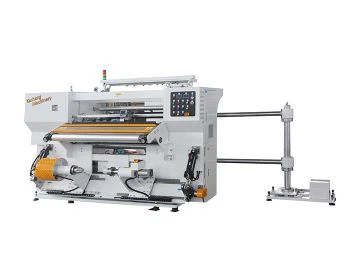
If you're in the plastic film processing industry, you already know that high speed slitters are the unsung heroes turning jumbo plastic film rolls into precise, market-ready widths-whether that's for food packaging, label stock, or industrial wrapping. But have you ever stopped to wonder what powers these workhorses to run at speeds exceeding 500 meters per minute, maintain razor-sharp cutting accuracy, and handle the tension-sensitive nature of plastic film without tearing or stretching? As a supplier of industrial slitters, I've spent thousands of hours troubleshooting, upgrading, and refining power systems for machines like the High Speed Bopp Slitting Machine and High Speed Plastic Film Slitter Machine, and today I'm breaking down exactly what makes these machines tick.
First, let's set a baseline: a high speed plastic film slitter isn't just a rotating blade with a motor stuck to it. It's a coordinated system that unwinds a 1-ton jumbo roll, transports the film through multiple tension zones, cuts it to exact dimensions, and rewinds dozens of finished rolls-all while syncing every part to within a fraction of a millimeter. The power source has to deliver three non-negotiables: consistent torque to handle varying roll weights, precise speed control to avoid film damage, and enough energy to keep the line running 24/7 without downtime. For many buyers, the power system is the difference between a slitter that pays for itself in a year and one that's a costly maintenance headache.
The most common, and most effective, power source for modern high speed plastic film slitters is a servo-motor-driven system paired with high-efficiency AC drives. I've seen countless older slitters run on DC motors, which were cheap in the 1990s but are clunky, prone to wear, and can't match the precision needed today. Servo motors, by contrast, use closed-loop control systems that constantly send feedback to the drive, adjusting power in real time. Let's break that down: when a jumbo plastic film roll unwinds, its weight drops as it's processed, which would cause sudden spikes or dips in tension if the motor didn't compensate. A servo motor can adjust its torque in milliseconds, keeping tension steady so the film doesn't stretch (a killer for plastic films like BOPP or PET, which are thin and easily deformable). This is why our High Speed Bopp Slitting Machine uses a 15kW servo drive for the unwind station and a 10kW servo for the rewind-balanced to handle even the most delicate films.
But power isn't just about the main motors. A slitter's accuracy relies on the cutting system, too-most high speed slitters use razor blades or shear blades, and those blades need consistent power to maintain their cutting edge and avoid misalignment. That's where smaller, high-torque spindle motors come in. For precision machines like the Precision Automatic Plastic Film Paper Roll Slitting Machine, our spindle motors run at up to 10,000 RPM, delivering the exact speed needed to cut cleanly without fraying the film. If the spindle motor lags, the blade drags, and you end up with unusable rolls; if it's too fast, the blade chips, leading to frequent blade changes and downtime. I once worked with a small packaging company that upgraded their old DC-driven slitter to a servo-spindle setup, and they cut blade replacement costs by 40% because the consistent power reduced wear.
Another critical component often overlooked is the auxiliary power for the slitter's control and automation systems. Modern slitters aren't just mechanical-they have touchscreens, roll diameter sensors, and safety interlocks that need reliable, low-voltage power. We integrate a UPS (uninterruptible power supply) with all our machines, especially models like the Plastic Film Roll Cutting Machine, because a sudden power loss mid-process can leave a jumbo roll tangled, damaging hundreds of meters of expensive film. A UPS acts as a backup power source for 5–10 minutes, enough time to safely stop the line without ruining the material. We also use energy-efficient LED lighting for the machine's work area, but here's a pro tip: the main drive system's power efficiency directly impacts a slitter's operating cost. Servo motors use 20–30% less energy than old DC motors, and high-efficiency AC drives convert almost 95% of incoming power into usable motion-so over a year, that adds up to thousands in savings for high-volume producers.


Wait, but isn't every slitter's power source the same? Not when you start looking at material-specific designs. For fabric or thicker plastic films, some slitters use variable speed drives (VSDs) paired with induction motors, but for thin, tension-sensitive films, that's a no-go. Let's take the Vertical Automatic High Speed Fabric Roll Slitting Machine-it's built for thicker, more durable materials, so its power system prioritizes higher torque at lower speeds to handle heavy rolls. By contrast, our BOPP slitter, which works with films as thin as 12 microns, needs high-speed, low-torque power to avoid stretching. I've heard some suppliers cut corners on power systems by using off-the-shelf motors, but that's a mistake-plastic film processing requires tuning power to the material's tensile strength, elasticity, and thickness.
I should also address a common misconception: some buyers think "high speed" just means faster motors, but it's about the power system's ability to sync every station. A slitter has unwinder, feeder, cutter, and rewinder stations-each needs to run at the exact same speed, with tension matched across the line. If the rewinder is even 0.5% faster than the feeder, the film will stretch; if it's slower, it will wrinkle. Servo drives make this sync possible because they communicate with each other via a shared network, not just mechanical belts or gears that can slip. I tested this once on a customer's old slitter: they were running at 300 m/min, and the rewinder was slipping 2% due to worn belts, leading to a 5% reject rate. We retrofitted a servo drive system, and that reject rate dropped to under 1%-all because the power system now kept the stations perfectly aligned.
Now, let's talk about what goes into choosing the right power source for your operation. If you're a small business processing specialty films, a mid-tier servo system might be enough, with a 7.5kW main drive and manual tension adjustment. If you're a large manufacturer running 24/7, you'll want a high-torque, fully integrated servo system with a backup UPS and predictive maintenance alerts built into the power drive. We include that predictive feature in all our modern machines: the drive monitors motor temperature, load, and wear, sending alerts before a component fails, so you can schedule maintenance during off-hours instead of facing unplanned downtime.
As a supplier, I don't just sell machines-I help clients match the power system to their needs. Last year, a company making compostable plastic film came to us with a unique problem: their film is biodegradable and tears easily, so they couldn't use a standard slitter. We swapped out their old motor for a low-torque, high-precision servo drive, adjusted the tension settings, and they now run their High Speed Plastic Film Slitter Machine at 450 m/min with almost zero film damage. That's the power of getting the power system right.
If you're in the market for a high speed plastic film slitter, don't make the mistake of focusing only on speed or price-ask about the power system. What type of motors does it use? Does it have closed-loop tension control? Is there a backup power source for safety? These details will make the difference between a machine that boosts your productivity and one that becomes a maintenance drain. If you're ready to discuss your specific application, whether it's BOPP, PET, specialty films, or other materials, we're here to help you find the right solution. Get in touch to start your procurement discussion today.