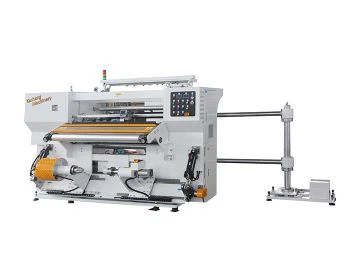
If you've ever worked in flexible packaging, label manufacturing, or converting plastic film into custom rolls, you know how much a high-speed slitting rewinding machine's performance makes or breaks your output. I get questions about this every single week from new and existing customers, but one of the most consistent ones is: "What's the actual slitting speed adjustment accuracy of these machines?" It's not just a random number you see on a spec sheet, either-this accuracy directly impacts your production waste, roll quality, and even your bottom line. Let's break this down like we talk about it in our production team's huddles, no fancy jargon or hidden fine print.
First, let's ground this in what slitting speed adjustment even means. Slitting speed isn't just how fast the machine runs-it's the precision of tweaking that speed, whether you're ramping up for a high-volume run of snack packaging film, slowing down for delicate label stock, or switching between materials entirely. A lot of cheap, entry-level slitter/rewinders max out speed adjustments at +/- 5% accuracy, and that's if you're lucky. But when you're running 1,000 linear feet of film per minute (that's standard for high-speed units), a 5% gap can add up to hundreds of feet of misaligned rolls, uneven slitting, or even material waste mid-run.
Here's the thing: the slitting speed adjustment accuracy of a high-speed slitting rewinding machine isn't a one-size-fits-all number. It depends on three main things: the control system, the drive motors, and how the machine is calibrated for the specific material you're running. That's why we lean hard on PLC control for all our units-check out our PLC Control Plastic Film Slitter Machine to see how that plays out in real time. PLCs (programmable logic controllers, for anyone who doesn't live in the conversion space) are way more precise than old analog dials or basic microcontrollers. They process speed adjustments in milliseconds, so you don't get that lag where you turn a dial and the machine lurches 10 seconds later, throwing your slitting accuracy off.
Let's get into the actual numbers we deliver on our high-speed horizontal slitters, which are built for the tightest accuracy requirements. For the core slitting speed adjustment (the speed at which the circular slitter blades cut through material), our standard high-speed units hit +/- 0.2% accuracy across the full speed range. Wait, that's not a typo-0.2%. For perspective, if you're running at 1,500 feet per minute, that means your speed never deviates more than 3 feet per minute from your set number. That's tiny, but it makes a massive difference when you're slitting thin plastic film for medical packaging, where even a half-foot misalignment can cause rejects during end-use packaging.
But speed adjustment accuracy doesn't exist in a vacuum. It ties directly to rewinding tension, too-another make-or-break metric for roll quality. If your slitting speed shifts even a little while rewinding, you'll get loose edges, wrinkled film, or cores that aren't perfectly aligned, which leads to downtime when the next process (like printing or bag-making) rejects the roll. Our High Speed Horizontal Slitting Machine for Plastic Flim has closed-loop feedback for both speed and tension, so the adjustment accuracy stays consistent even when you're switching between different film thicknesses (from 10 micron flexible packaging film up to 100 micron label stock).
I've seen way too many customers buy cheap slitters that brag about high top speeds but deliver garbage adjustment accuracy. Last year, a small flexible packaging shop reached out to us because their old slitter was running at +/- 4% speed accuracy, and they were wasting 12% of their material on bad rolls. They switched to our standard unit, cut their waste to 1.8%, and boosted their output by 15% because they weren't stopping to fix misaligned rolls every hour. That's the kind of real-world impact the spec sheets don't always highlight.
Now, let's talk about variables that can throw that accuracy off, because it's not just the machine itself. If you're running a material that's inconsistent-like fabric rolls with slight thickness variations, or thin film that stretches when pulled-you need a machine that can adapt fast. Our Vertical Automatic High Speed Fabric Roll Slitting Machine is built for that: it has built-in sensor feedback that adjusts speed in real time to match material stretch, so your adjustment accuracy stays steady even when the input material isn't perfect. For labels, we have Double Rewinding High Speed Label Slitting Machine units that adjust slitting speed on the fly for short runs of custom labels, where you might switch jobs every hour and don't want to spend 20 minutes calibrating each time.
Wait, let's clarify one common misconception: slitting speed accuracy vs. slitting line speed. A lot of people mix these up, but they're different. Slitting speed is the speed at which the blades rotate to cut the material, while line speed is the overall speed the material moves through the entire machine (from unwinder to rewinder). The accuracy we talk about applies to both, but the blade speed accuracy is extra critical-if the blades aren't rotating at exactly the right speed, you'll get uneven cuts, burrs on the edge of the film, or even cuts that don't go all the way through the material. Our PLC control system syncs blade speed to line speed automatically, so you don't have to tweak two separate numbers manually- that's part of what makes the adjustment so precise.
How do we test this accuracy at our facility? We don't just run a test for 10 minutes and call it good. We run 8-hour continuous runs, switching materials every hour, ramping speed from 500 to 1,800 feet per minute, and checking the speed with laser sensors every 10 seconds. Over the last 5 years, our average slitting speed adjustment accuracy across all high-speed units we've shipped is +/- 0.18%. That's right at the top of the industry for standard units, and we can customize it even tighter for clients running ultra-delicate materials, like lithium-ion battery separator film, where even a 0.1% speed deviation can ruin the roll.


Another thing that impacts accuracy: maintenance. A machine can have the best spec in the world, but if you don't keep the drive motors and sensors calibrated, that accuracy drops fast. We train all our customers on quick, easy calibration checks that take less than 5 minutes a week, and our service team is on call to adjust accuracy if they ever need a tune-up. We also build our machines with industrial-grade components, so you don't have to replace parts every year to keep the adjustment accuracy high-something cheap import slitters can't match.
Let's circle back to the question: is that accuracy worth the extra cost? For most converters, yes. The waste reduction alone pays for the machine upgrade within 6 to 12 months. If you're running high-volume, low-margin products like flexible packaging for food or consumer goods, even a 1% drop in waste saves you tens of thousands of dollars a year. If you're running custom, high-margin products like premium labels or medical films, the consistency of accurate speed adjustment means you can command a higher price because your rolls are defect-free.
We've worked with everything from startup flexible packaging shops to Fortune 500 label manufacturers, and the feedback is consistent: the slitting speed adjustment accuracy is one of the top reasons they reorder our machines. One client that runs 24/7 for snack packaging told us last quarter that their reject rate went from 9% to less than 2% after switching to our Flexible Packaging Film Slitting Machine. That's the kind of win you can't get with a machine that cuts corners on control systems or motor precision.
At the end of the day, when you're shopping for a high-speed slitting rewinding machine, don't just look at the top speed number. Dig into the slitting speed adjustment accuracy, check what kind of control system it uses, and ask for real-world performance data, not just spec sheet claims. If you're tired of wasting material on bad slits and misaligned rolls, let's chat about how our units can fit your needs. We can walk you through our different models, show you test data, and figure out exactly the right machine for your production line. Just reach out to our team to start the conversation about upgrading your slitting process.